
Why your design system drifts, and how to keep it in sync with code
Colors copied by hand, spacing guessed in code, components that slowly diverge. Here is why design systems drift and the habits that keep design and code aligned.

2 min read
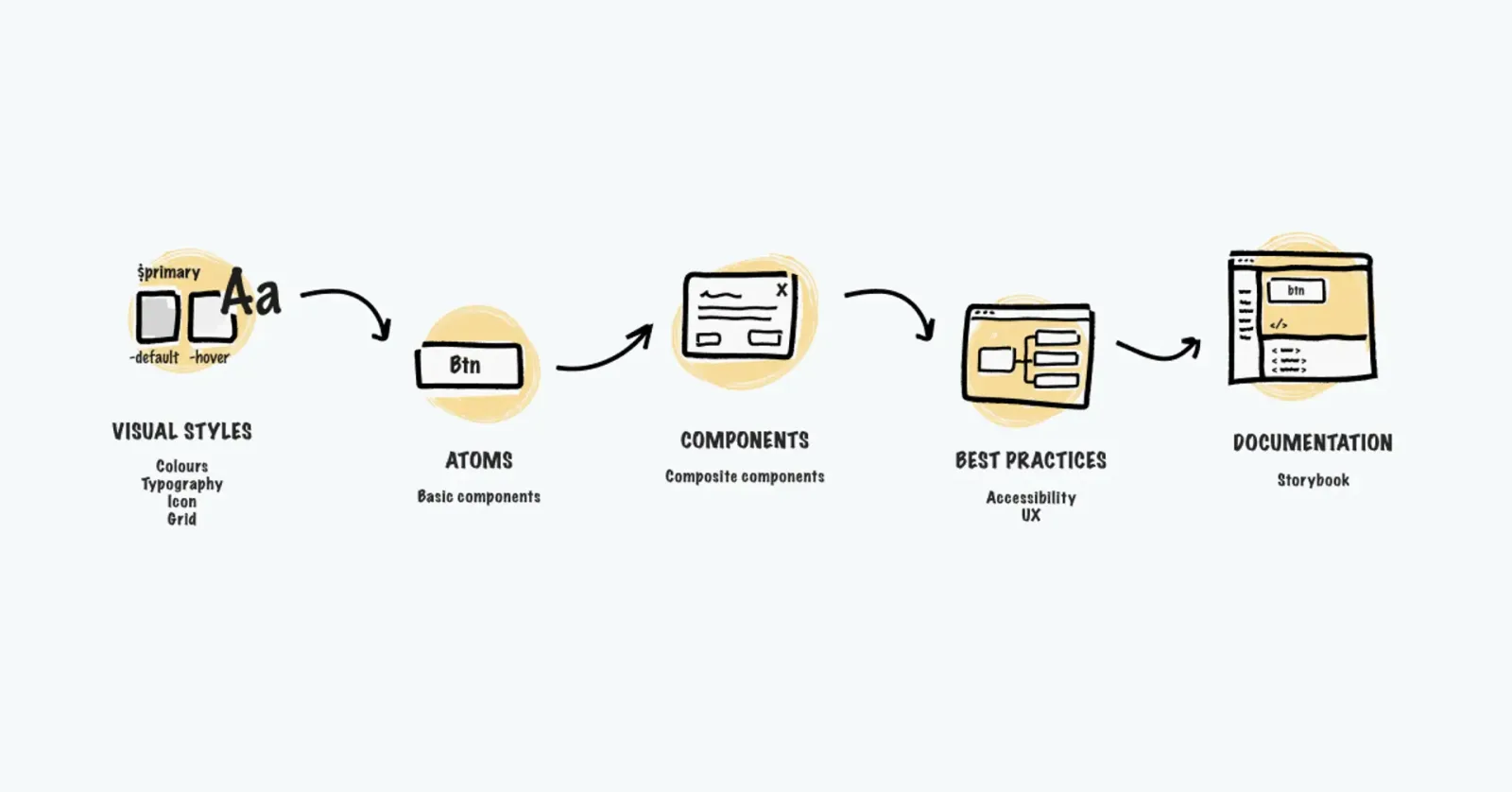
Every product team has lived this moment. The design file says one shade of green, the app ships another, and nobody remembers when the two parted ways. A design system is supposed to prevent exactly that. Yet most of them drift within months.
The problem is rarely the quality of the system itself. It is the distance between the place where decisions are made and the place where they are shipped.
Where drift comes from#
Drift is the sum of small, reasonable shortcuts:
- Values copied by hand. A hex code moves from a design tool to a stylesheet through a clipboard. The next redesign updates one side only.
- Missing intent. Code receives
#0D7C66, not "primary action color". When the brand evolves, nobody knows which values to change. - Several sources of truth. A Figma library, a Tailwind config, a Storybook and a wiki page that each describe the same tokens, slightly differently.
- No review of the output. Designers review screens, developers review logic. Nobody reviews whether the tokens in production still match the decisions.
None of these is dramatic on its own. Together, they turn a design system into a historical document.
Name decisions, not values#
The first fix is vocabulary. A token such as color.action.primary carries a decision. A raw value carries nothing. When every component consumes named decisions, a rebrand becomes a change of a few tokens instead of a search through hundreds of files.
A good rule of thumb: if a developer has to guess which token to use, the naming is not finished yet.
One source of truth, many outputs#
Designers and developers do not need the same format, but they do need the same source. Define tokens once, then generate what each side consumes: CSS custom properties, a Tailwind theme, SCSS variables, a Figma library. Generation removes the clipboard from the loop, and with it most of the drift.
| Without a single source | With a single source |
|---|---|
| Values copied by hand | Outputs generated |
| Rebrand touches hundreds of files | Rebrand touches a few tokens |
| Drift found by users | Drift caught before release |
Make the handoff a contract#
Handoff should not be a meeting or a link to a file. It should be a versioned package that code depends on, with a changelog that says what changed and why. When the contract changes, the build tells you, not your users.
Check what actually ships#
Finally, close the loop. Compare the tokens used in production with the tokens you defined, and treat any difference as a bug. This is the step most teams skip, and the one that keeps a system alive over years.
Where Yubild fits#
We built Yubild around these habits: a single source of truth for every color, font and spacing value, generated outputs for each stack, and a governed handoff that keeps design and code aligned. Whatever tools you use, the principles stay the same: name decisions, generate outputs, version the contract and check what ships.
- #design-systems
- #design-tokens
- #handoff
Keep reading

MCP for design systems: letting AI assistants use your real tokens
AI assistants write a growing share of interface code, often with invented colors and spacing. The Model Context Protocol lets them read and use your actual design system instead. Here is why it matters and how it works.
Design tokens explained: the single source of truth between design and code
Design tokens turn visual decisions into named, reusable values that designers and developers share. What they are, how to name them, and how to keep them from becoming another file nobody updates.

Building digital products for institutions: lessons from the field
Institutions do not buy products the way startups build them. Long procurement, many stakeholders, fragile connectivity and processes written on paper. What years of building digital services for organisations have taught me.
Turn your design decisions into production tokens
Build, govern and ship your design system with Yubild.
Start for free